The short answer
- Texture, material, models or foodHire the photographer. Nothing here replaces that.
- Studio quality without a day rateAn on-demand studio like soona — you pay per image.
- Photos that just look unfinishedA freelance retoucher, not a shoot.
- Clean catalogue shots on a budgetA lightbox and your phone. Best value in the category.
- Restaging photos you already haveAI image tools — Photoroom, Pixelcut.
- A post up this afternoonstartposting — photo in, finished post out. That is the one we make.
The number
What a photographer actually costs.
Shopify’s published pricing guide puts it at $50 to $350 per image, or $500 to $3,000 for a day, with rush jobs adding 25% to 200% of the total. A working photographer’s 2026 rate card, read on 28 July 2026, breaks it down further:
White background, simple product
$25–$75 per image
White background, complex product
$75–$150 per image
Lifestyle
$75–$300 per image
Flat lay
$50–$200 per image
Half day (4 hours)
$500–$2,500
Full day (8 hours)
$1,000–$5,000
Package of 10–20 images
$300–$1,200
50+ SKUs, negotiated
$20–$40 per image
Advanced retouching
+$10–$50 per image
Professional styling
+$500–$1,500 per day
Run that against a real shop. Thirty products, one angle each, at the cheapest bulk rate anyone quotes — $600 to $1,200, before styling, before retouching, before a second angle, and before the reshoot when you change the packaging. At standard per-image rates the same thirty products land between $1,500 and $10,500.
And the prep is real work that happens before the invoice: published guidance asks clients to clean, steam and polish their products before they arrive, and to bring a written list of exactly which product needs which shot.
Straight answer
When a photographer is worth every penny.
We sell software and we are still going to say this plainly, because the alternative is you spending money badly on our advice. Hire the photographer when:
- the material IS the product — fabric weave, glaze, leather grain, the sheen on a glass bottle. A camera and real lights capture that; nothing else on this page does
- there is a person in the shot. Models, hands, anyone wearing or using the thing
- it is food. Styling is most of the job and a stylist earns their $500–$1,500 a day
- it is your brand's hero imagery — the shots that carry your homepage, your packaging and your press kit for the next two years
- you need a coherent look across a whole range, shot in one session under one light
- the product is reflective, transparent or awkward. Those are the ones that defeat every shortcut, including ours
If any of those is the job in front of you, book the shoot and stop reading this page.
Show the working
How we picked — the criteria, stated first.
- Sorted by job, not ranked. These are not six versions of one thing. A photographer and a lightbox solve different problems, and a single ordering would be a claim you could not check.
- The first entry is the thing we are an alternative to. Hiring the photographer leads the list because for several jobs on this page it is the right answer and we are not.
- We appear once, at the end. Five of the six jobs here have somebody else's name against them.
- Every figure carries its source and its date. Cost guidance was read on 28 July 2026 in US dollars. Rates vary by market and by photographer; treat these as ranges, not quotes.
- No affiliate links, and no links out at all. We earn nothing whichever route you take, and we do not link to any of the options. Shopify is linked because it is a source for the numbers, not one of the options.
The shortlist
The six routes, by job.
The shot has to sell the material itself
Hire the photographer
Sometimes there is no substitute and pretending otherwise would waste your money. Fabric weave, the sheen on glaze, condensation on glass, how a fragrance bottle throws light — a good photographer with real lighting captures those in a way nothing on this list matches. Same for anything with a person in it, and for food, where the styling is half the job.
- Where it wins
- Irreplaceable for hero shots, brand launches, texture-led products and anything involving a model.
- What it costs
- $50–$350 per image, or $500–$3,000 a day. Rush jobs add 25–200% of the total.
You want studio quality without a day rate
An on-demand studio (soona and similar)
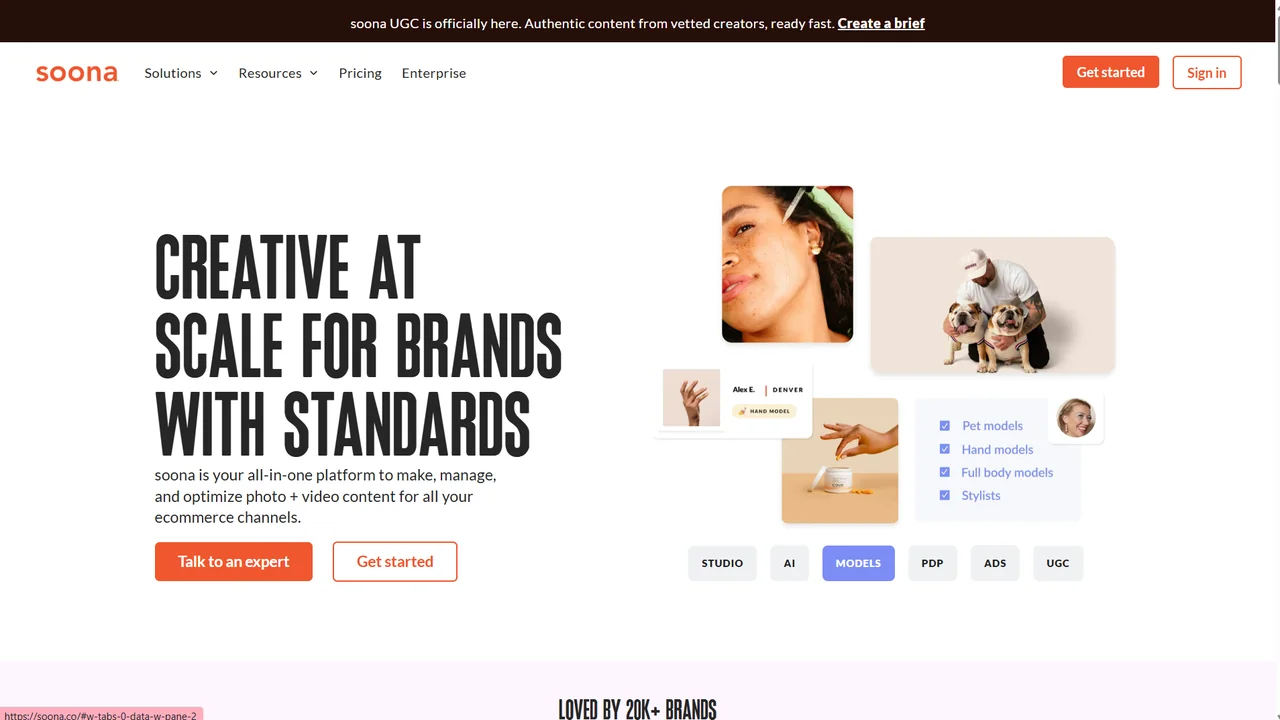
You ship your products in, or book a slot at a physical studio, and pay per finished image rather than for someone's day. It removes the biggest barrier for a small shop — the minimum spend — while keeping a real camera and real lighting available. Read their site before you assume that is all you are buying, though: soona now sells AI, models, UGC and ad creative from the same platform, and the front door is aimed at brands at scale rather than at one shop.
- Where it wins
- Studio output priced per image. No day rate, no minimum shoot.
- What it costs
- Per-image pricing with virtual and in-person options; you still ship or deliver the product.
Your photos are fine, they just look unfinished
A freelance retoucher
If the shot is basically right and the problem is a messy background, uneven colour or a distracting reflection, you are buying editing rather than photography. Marketplaces are full of people who do this well and cheaply, and you keep control of the shooting.
- Where it wins
- The cheapest way to make photos you already have look professional.
- What it costs
- Priced per image, and well below shooting rates. Advanced retouching from a photographer runs $10–$50 an image by comparison.
You need clean catalogue shots and have more time than money
A lightbox and your phone
A collapsible lightbox, a phone and a window will produce perfectly acceptable white-background listing photos for most small products. It is genuinely the highest return on a small amount of money in this whole category — and it is work, every time, for every product.
- Where it wins
- One-off cost, then unlimited shots. Nothing else here has that shape.
- What it costs
- A one-off equipment purchase, then your own time on every shoot.
You need to clean up and restage what you already shot
AI image tools
Photoroom, Pixelcut and the rest remove backgrounds and drop your product into a generated scene. They are fast and cheap and they solve the staging problem. What they hand back is a finished image — the caption, the headline and the hashtags are still yours to write.
- Where it wins
- Background removal and restaging, in seconds, from a photo you already have.
- What it costs
- Monthly subscriptions, usually credit-metered.
You need a post this afternoon, not a shoot next month
startposting.
You photograph the product on your kitchen table with your phone. We restyle the scene around it — lighting, surface, backdrop — and write the headline, the caption and the hashtags to match. The image is made by AI and it is not a photograph — it starts from your photo of your real product and restyles the scene around it. One photo, three questions, seconds.
- Where it wins
- It is the only route here that returns a finished POST rather than a finished photograph.
- What it costs
- 3 posts free, no card. Paid plans are metered in posts, and unused posts never expire.
Their screen, not ours
What the on-demand studio actually looks like.
Only one of the six routes on this page is a company with a screen — the others are a person, a lightbox, or a category. So there is one frame here rather than a strip. Captured from soona’s own public site on the date shown, in an ordinary desktop browser window, unedited and uncropped. We are not affiliated with them and we do not link to them.
soona
Worth reading the page rather than the category. “At scale for brands”, Enterprise in the navigation, and “Talk to an expert” as the first button — and the product row now runs Studio, AI, Models, PDP, Ads, UGC. The per-image studio is one tab of six.
soona’s own site, captured 2 August 2026. The screen, and everything on it, belongs to them and not to us.
Side by side
The six routes, on seven questions.
Hire the photographer
- Real camera, real lighting
- Yes — best here
- Captures texture and material
- Yes — best here
- Works with models or food styling
- Yes
- Cost for 30 products
- $600–$10,500
- Time to first image
- Weeks
- Writes the caption
- No
- Repeatable weekly without new spend
- No
An on-demand studio (soona and similar)
- Real camera, real lighting
- Yes
- Captures texture and material
- Yes
- Works with models or food styling
- Yes
- Cost for 30 products
- Per image
- Time to first image
- Days
- Writes the caption
- No
- Repeatable weekly without new spend
- No
A freelance retoucher
- Real camera, real lighting
- No
- Captures texture and material
- No
- Works with models or food styling
- No
- Cost for 30 products
- Editing only
- Time to first image
- Days
- Writes the caption
- No
- Repeatable weekly without new spend
- No
A lightbox and your phone
- Real camera, real lighting
- Yes, basic
- Captures texture and material
- Partly
- Works with models or food styling
- No
- Cost for 30 products
- One-off kit
- Time to first image
- An afternoon
- Writes the caption
- No
- Repeatable weekly without new spend
- Yes, your time
AI image tools
- Real camera, real lighting
- No
- Captures texture and material
- No
- Works with models or food styling
- No
- Cost for 30 products
- Monthly
- Time to first image
- Seconds
- Writes the caption
- No
- Repeatable weekly without new spend
- Yes
startposting.
- Real camera, real lighting
- Your phone
- Captures texture and material
- Your photo does
- Works with models or food styling
- No
- Cost for 30 products
- Monthly
- Time to first image
- Seconds
- Writes the caption
- Yes
- Repeatable weekly without new spend
- Yes
The real answer
The mistake almost everyone makes.
Every page like this one frames the choice as photographer versus software, and software is cheaper. That is true and it is not the useful part. A photographer and a post generator are not competing for the same purchase — they are competing for different frequencies.
A shoot is a capital expense. You do it once or twice a year, you get images that carry your website, your packaging and your press for the next two years, and the cost per use falls every month you keep using them. Judged that way, $1,200 for a proper session is often cheap.
Social posts are a weekly grind. Three a week is roughly 150 a year, each one alive for about 48 hours. Commissioning a photographer for that is like hiring a chef to make your lunch every day — not because the chef is bad, but because you have mismatched the tool to the frequency.
So the honest recommendation for most small shops is both, at different intervals. Shoot properly once a year for the hero images. Handle the weekly posts from your phone in the meantime. That costs a fraction of shooting everything, and it keeps the good photography for the places where it earns its money.
Made with startposting
What startposting. gives you back.
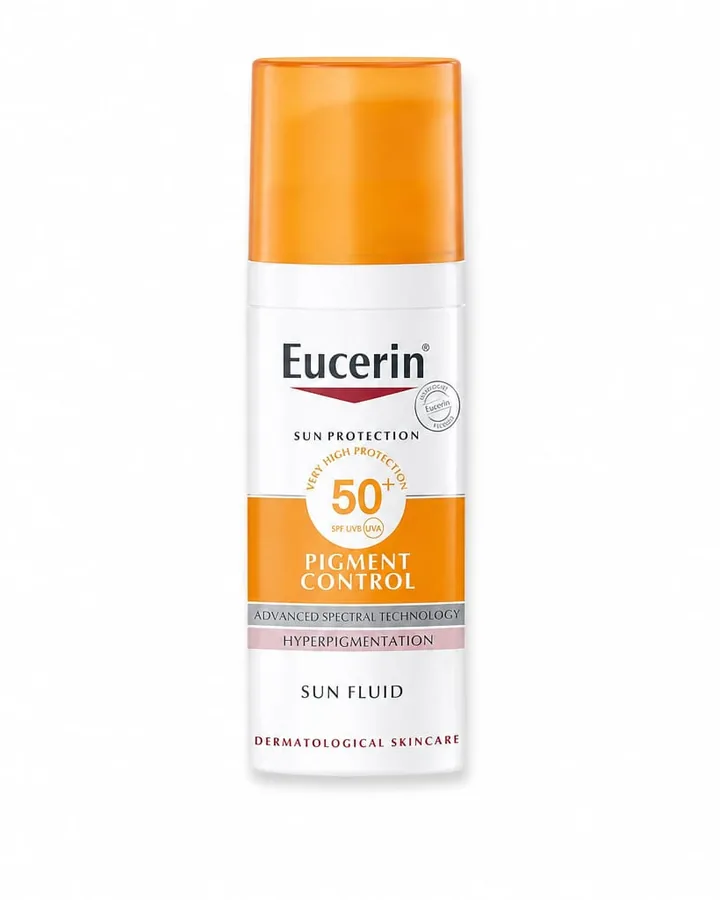
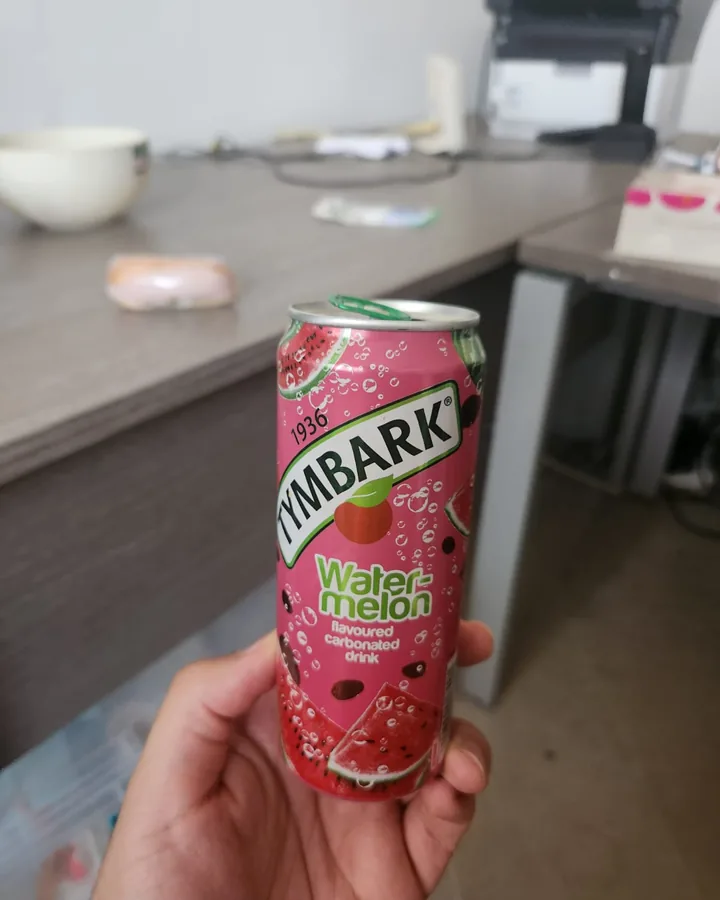
Unedited output from our own tool, not stock and not a mock-up. On the left is a phone photo of the kind any seller can take in a minute; on the right is what startposting. sent back. These are not studio photographs and we are not claiming they are. They are what a phone photo becomes when the scene is restyled around the real product — in seconds, with the headline, caption and hashtags written to match. The bottle is the seller’s bottle, with the seller’s label.
Before
After — ready to post
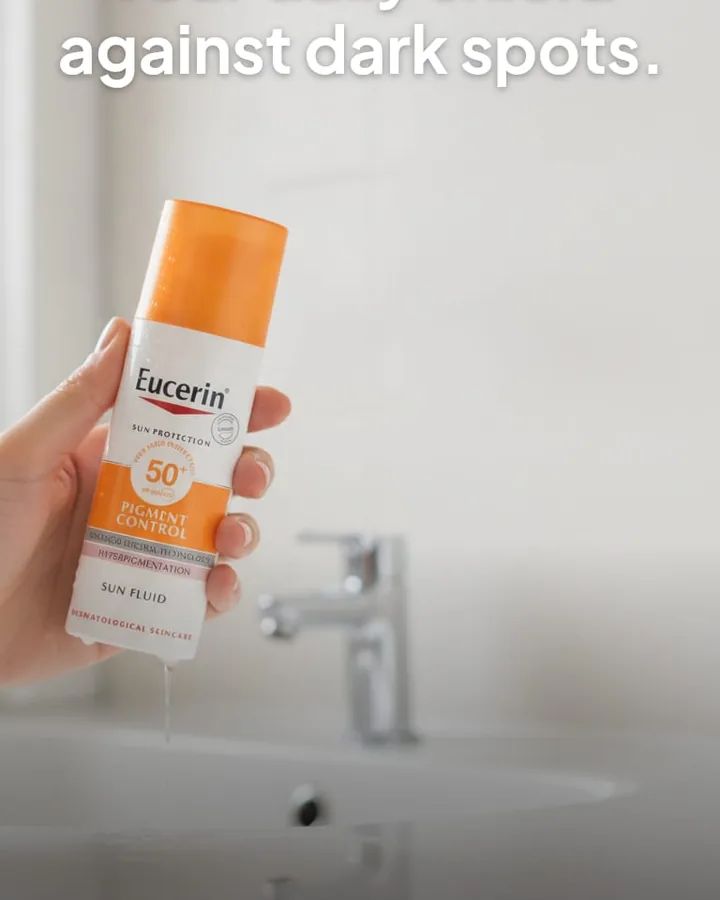
caption + hashtags written with the image — nothing left for you to fill in.
Before
After — ready to post
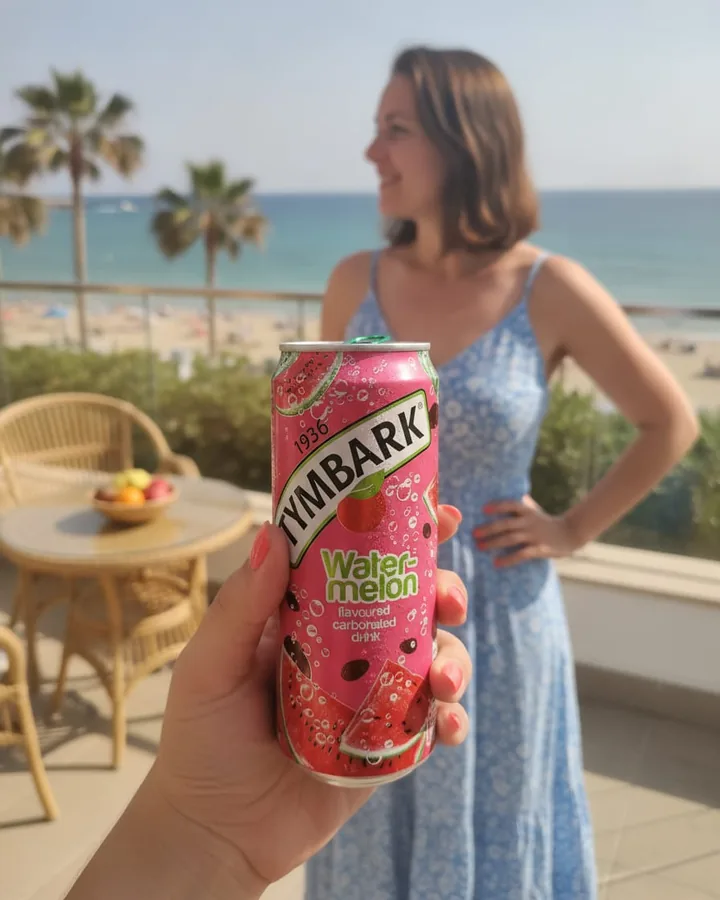
caption + hashtags written with the image — nothing left for you to fill in.
Questions
The things people ask before booking.
How much does a product photographer cost in 2026?
Shopify's published guide puts it at $50 to $350 per image, or $500 to $3,000 for a day, with rush fees adding 25% to 200% of the job. A working photographer's 2026 rate card, read on 28 July 2026, is more granular: $25 to $75 an image for simple white-background e-commerce, $75 to $150 for complex items, $75 to $300 for lifestyle, and $1,000 to $5,000 for a full day. Bulk of 50 or more SKUs negotiates down to $20 to $40 an image. Advanced retouching adds $10 to $50 an image and professional styling $500 to $1,500 a day on top.
Is it cheaper to use AI than hire a photographer?
Per image, dramatically — but that framing is a trap. A photographer produces assets you will use for years across your website, packaging, ads and press. Software produces this week's posts. You are not choosing between them on price at all. You are choosing which of two different jobs you need done, and they are not the same job.
What can a photographer do that AI cannot?
Capture the actual material. Fabric weave, glaze, condensation, the way light moves through glass or a fragrance bottle. Anything with a person in it. Food, where styling is most of the work. And a coherent look across a whole brand rather than image by image. If any of those is what the shot has to do, hire the photographer and stop reading this page.
Do I need to hire anyone at all?
Often not, and anyone selling you something should say so. A collapsible lightbox, a phone and a window will produce acceptable listing photos for most small products, for a one-off cost. It is the best value in this whole category. The catch is that it is work, every time, for every product.
What does a photographer need from me?
More than people expect. Published guidance asks clients to clean, steam and polish products before they arrive, and to bring a written list of exactly which products need which shots. The prep is real work, and it happens before the invoice.
Can I combine a photographer with startposting?
That is the combination we would actually recommend to a growing shop. Shoot properly once or twice a year for the hero images that carry your website and packaging, and use us for the weekly social posts in between. It costs a fraction of shooting everything and it keeps the good photography for where it earns its money.
Will my product look the same as it does in real life?
That is the thing we treat as non-negotiable. The finished image is made by AI and it is not a photograph, so we say that plainly. It starts from your own photo of your real product and is built to keep that product recognisably yours — shape, label and colours — while the scene around it changes. Check every post before you publish it, the same way you would check a retoucher's work.
How long does a shoot take end to end?
Booking, prep, shipping or travel, the shoot itself, then editing and delivery — realistically weeks from decision to usable images, and that is before any reshoot. For a seasonal launch that is fine. For a post you wanted up today it is the wrong tool, which is the whole point of this page.
Keep reading
- Midjourney alternatives for product photos — if you tried generating the shot instead
- Best Photoroom alternatives — if you have gone the software route already
- Alternatives to hiring a social media manager — if the posts are what never gets made
- Best Canva alternatives — sorted by what you actually used it for
- How to turn one product photo into a ready-to-publish Instagram post
Try it on one product.
Three posts free, no card.
Start freesoona, Photoroom and Pixelcut are trademarks of their respective owners. startposting is not affiliated with, endorsed by, or sponsored by any of them, and earns nothing from any recommendation on this page. Cost figures are published 2026 guidance in US dollars, read on the date shown; rates vary by market and by photographer and are ranges rather than quotes.